Author: oficina_admin
Ovos Moles IGP 2019

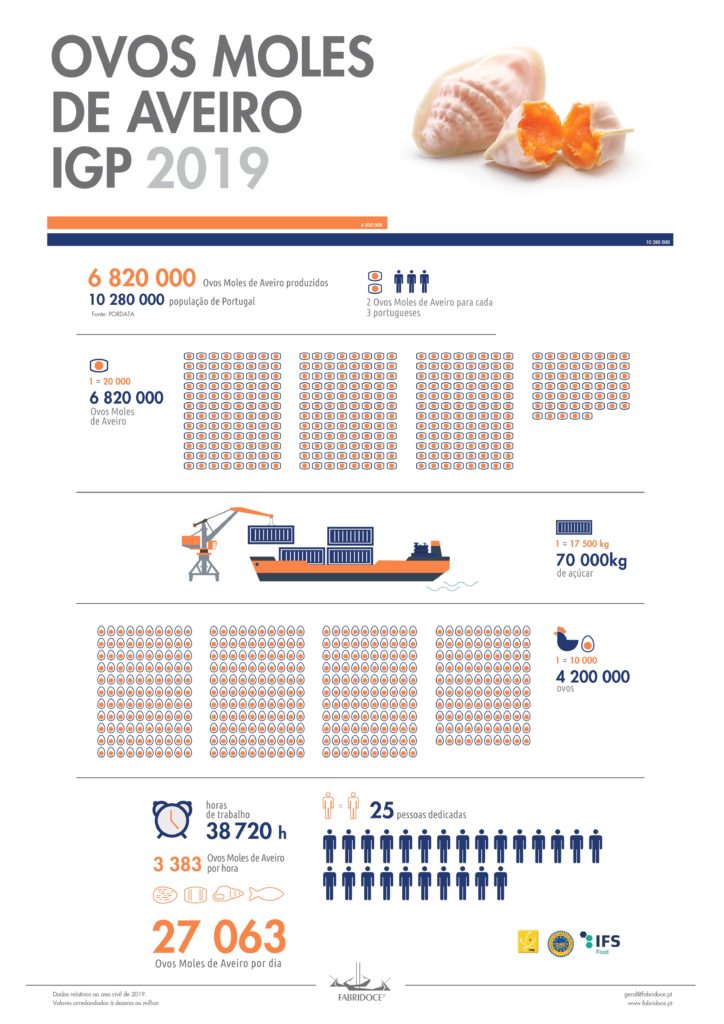
On December 31st, 2019, FABRIDOCE reached an historical production number: we produced more than 6 million and 800 thousand Ovos Moles de Aveiro in a single calendar year, an average of more than 27,000 Ovos Moles de Aveiro per day. This is a fantastic number achieved based on 3 realities:
- in the increase in the number of national and international tourists that Portugal has had in recent years.
- in the solidity of the partnerships with the most important national distribution chains that make the delicacy available throughout the national territory.
- in the know-how of a team of collaborators who every day strive to make a product of immense quality.
We thank you all for your contribution to this extraordinary number.
In these days of March 2020, where some uncertainty reigns, it is still possible to find Ovos Moles de Aveiro in the overwhelming majority of supermarket chains. We thank our customers for their confidence in maintaining the acquisition of the product and our employees day after day to keep the focus on the production of this secular delicacy so appreciated by the Portuguese.
Ovos Moles de Aveiro History
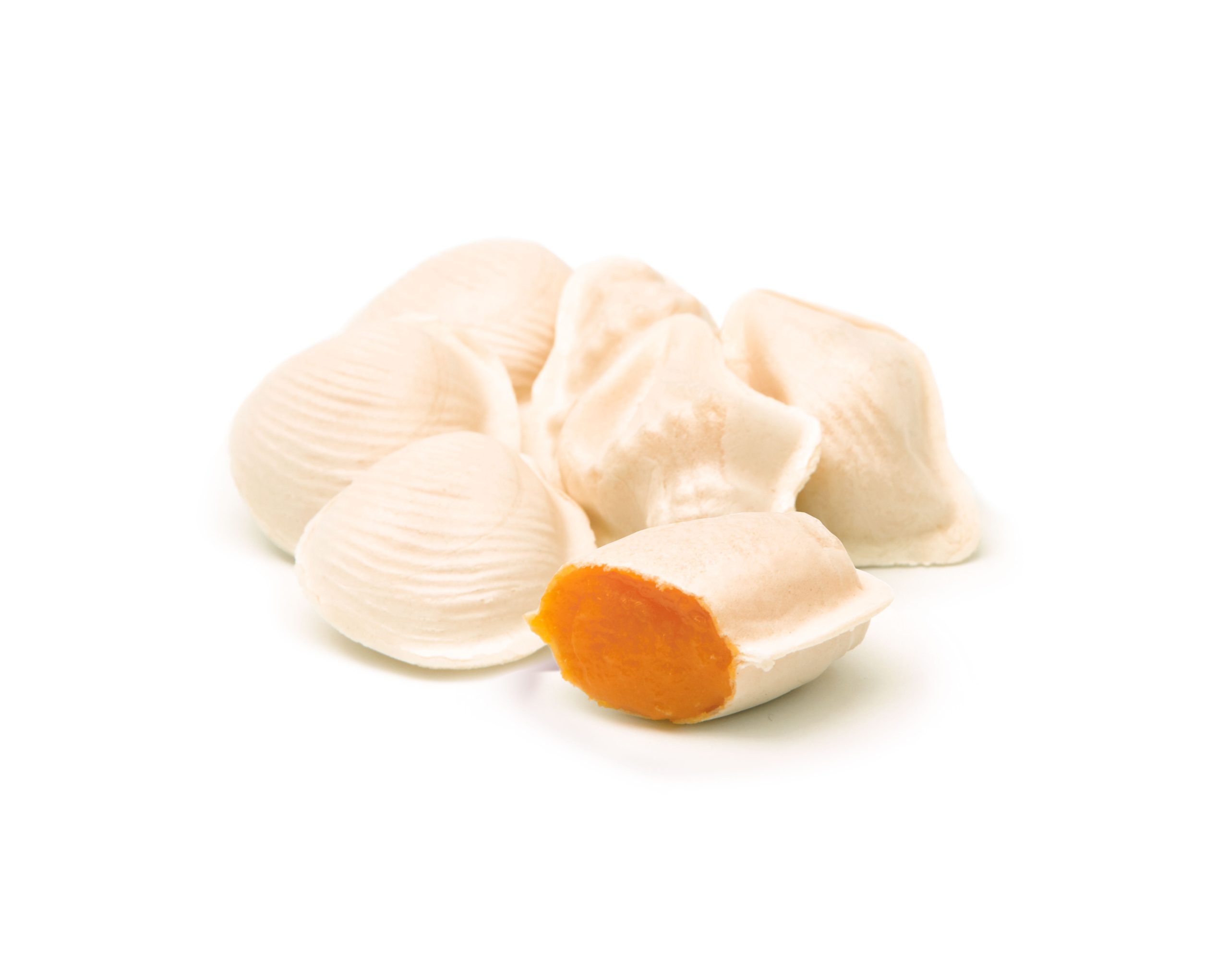
Ovos Moles de Aveiro IGP is the tourist and gastronomic icon of the Aveiro region. Born in the 16th Century in the Convent of Jesus of Aveiro, they are obtained by joining yolk with a sugar syrup and the traditional know-how, following the conventual recipe transmitted in secret over generations.
At that time, egg whites were used by nuns in domestic chores, such as ironing clothes. With so much yolk left over, they began to be used in the manufacture of conventual sweets, used at the time as a medicine. The nuns used sugar from Madeira Island, the yolks and water and produced the egg mass that was placed in wafers, thus creating a delicacy loved by so many throughout all these centuries.
Aveiro, is a city known for its privileged location, where the Ria and the Sea come together, which in turn, serves as inspiration for this delicious and nutritious sweet, which once served to strengthen the sick in the conventual wards.
Ovos Moles de Aveiro was the first Portuguese conventual product to be awarded the Protected Geographical Indication (PGI) designation by the European Union. This qualification ensures a maximum guarantee of quality, maintaining the original recipe and traditional confection method, based on the heritage of men and women and traditional Portuguese know-how.
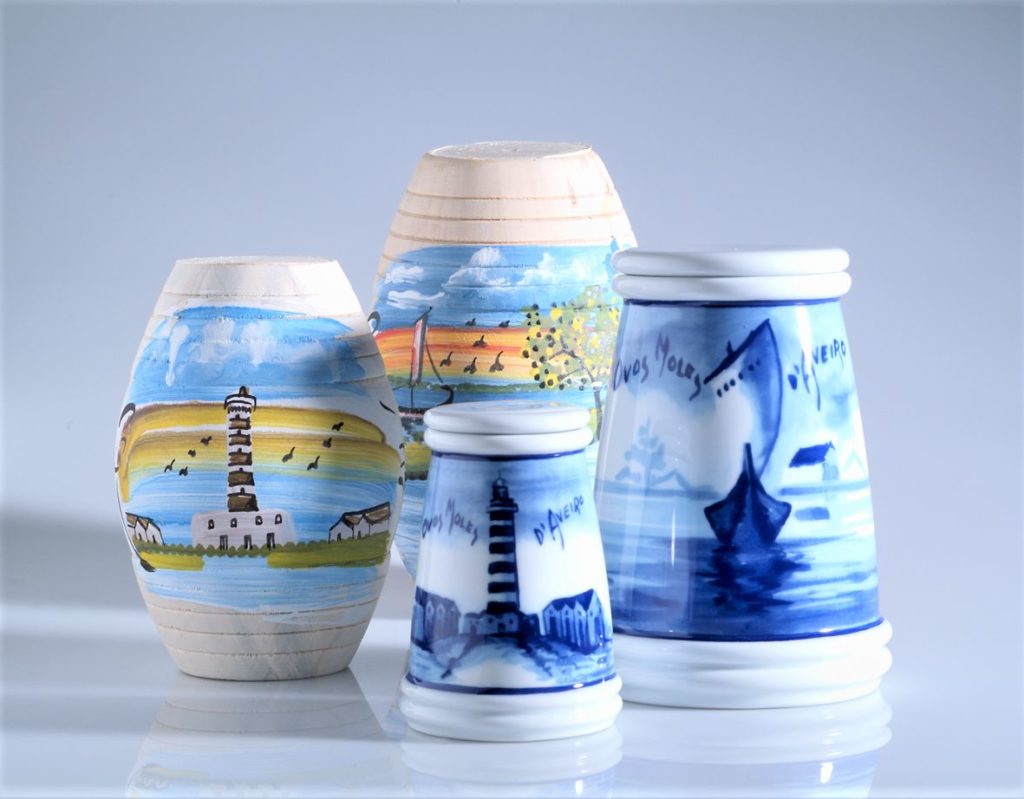
The handmade wooden barrels and porcelain, decorated to popular taste, with motifs that invoke the moliceiros boats and the salt pans, show the care put in the presentation of a product that characterizes a city where good taste and aesthetic sense always prevail, as can be admired in the gracefulness of the arte-nova houses, the tiles, the churches and convents, or the always beautiful moliceiros boats.
Eça de Queiroz, in his work “Os Maias”, makes reference to this delicacy: “They are six barrels of soft eggs from Aveiro. It’s a very ‘chic’ candy… Ask V. Exª to Carlos. Isn’t it true, Carlos, that it’s a delicacy, even known outside?” You may find the Ovos Moles de Aveiro wrapped in wafers or stored in wooden or porcelain barrels. Ovos Moles de Aveiro IGP do not need to be kept cold, but they should be kept in dry and cool places, away from sunlight.
PARIS-BREST WITH CREME OVOS MOLES FROM AVEIRO


Choux pastry 150g all purpose flour 100g butter 125g milk 125g water 4 eggs 5g salt 1 tbsp icing sugar Flaked almonds and pearl sugar 1 egg for egg wash
Filling 300g Creme Ovos Moles de Aveiro 100g Fios de Ovos 70g toasted almond

Chantilly 250g mascarpone cheese 125ml whipping cream (c/ 35% fat), chilled 80g icing sugar (or more, if desired) 1 tsp vanilla paste
CHOUX PASTRY Preheat the oven to 200°C. Line a baking tray with baking paper. Draw an 20cm circle in the centre of the sheet of baking paper, then flip the paper over. Bring the milk, water, sugar and butter to the boil then incorporate the flour, icing sugar and salt. Using a rubber spatula, work the paste over a medium heat until it is quite dry and coming away from the edges of the pan. Transfer the mixture to a heatproof bowl and leave to cool for 5 minutes. Lightly beat 4 eggs, then add them to the mixture, a little at a time, beating well after each addition, until thick and glossy. Spoon the dough into a piping bag fitted with a plain, round 2cm nozzle. Over the circle template, pipe two circles of pastry next to each other and finally a third circle overlapping the first two. Glaze the surface with the egg wash using a pastry brush. Sprinkle flaked almonds over the entire surface. Bake for 10 minutes, then reduce the oven to 180°C and bake for a further 20 minutes or until puffed and golden. Turn off the oven and allow to cool in the oven with the door ajar.
CHANTILLY Whip the mascarpone until smooth. Add the heavy cream, vanilla and sugar and beat until firm.
ASSEMBLY Use a sharp knife to split the pastry ring in half horizontally. Spread the egg cream over the bottom half and then sprinkle the toasted almond. Spread or pipe the whipped cream over and then top with some egg yarn. Place the top of the wreath over the cream. Decorate withicing sugar.

Original recipe Coco e Baunilha
SPELT & OAT CREPES WITH PORTUGUESE OVOS MOLES ICE CREAM
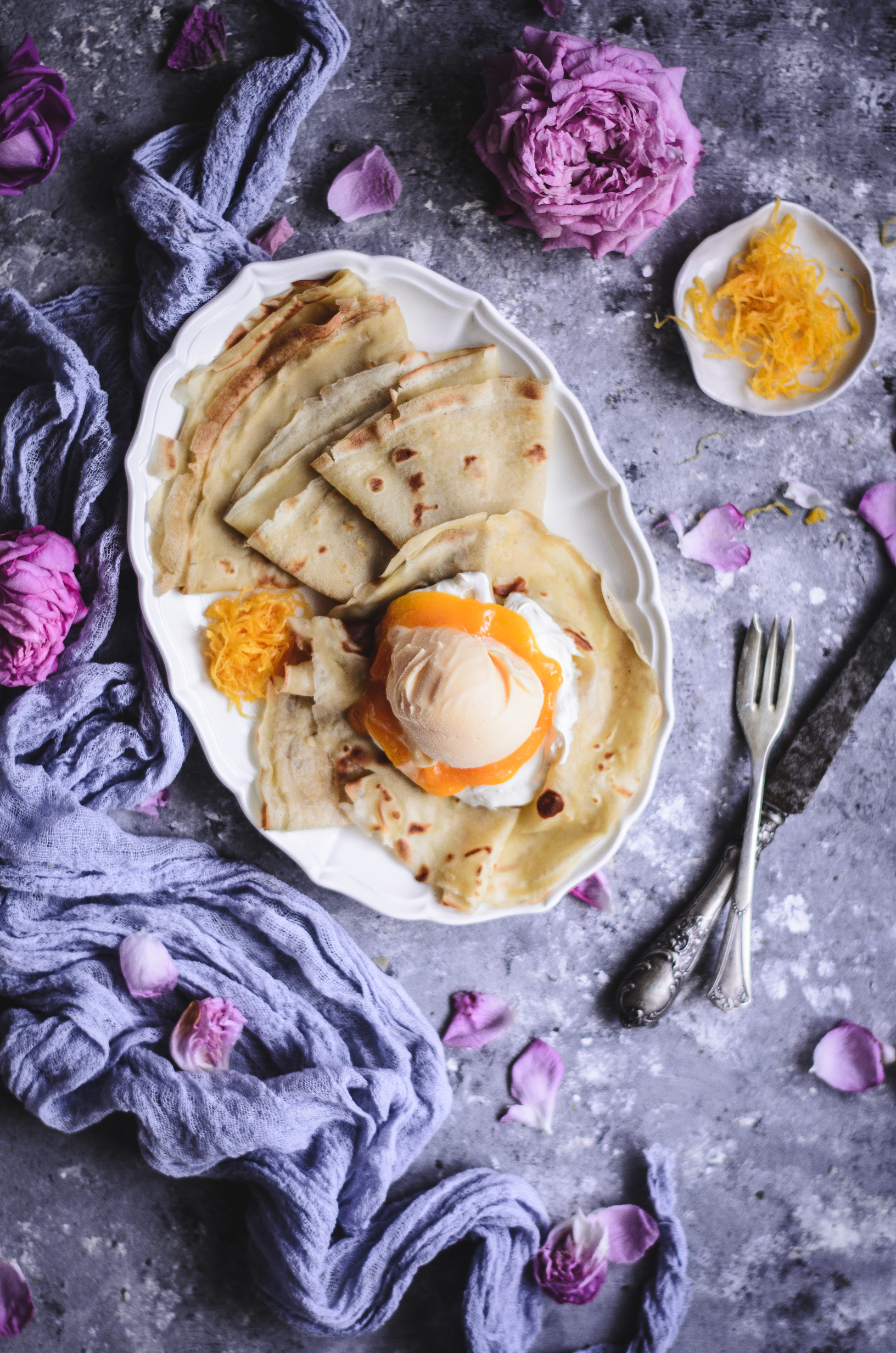

Make 12 crepes 550g oak milk (or almond milk) 2 eggs Pinch of salt 1 tsp vanilla paste 1 tbsp Rhum 1 tbsp de coconut oil 2 tbsp brown sugar Zest of 1 lemon 250g spelt flour (or all purpose)
To serve 450g Ovos Moles Ice Cream, from Gelados de Portugal 100g Fios de Ovos 125g Creme de Ovos Moles 300g
* The coconut oil is usually solid at room temperature so you should put the container a few minutes in a bain-marie (in a container with hot water) until it melts.
CREPES
Mix all ingredients together until thoroughly blended. Set the batter aside for minimum 30 minutes. Heat a tsp of olive or coconut oil in a skillet (Ø21cm) or crepe pan over medium heat until melted.
Pour 2 to 3 tablespoons of batter into the heated pan and swirl the batter around the pan quickly so as to distribute the batter thinly. Cook the crepe for 30 to 45 seconds or until small bubbles begin to appear in the batter, flip the crepe and cook the other side for 30 seconds. Remove from the pan to a warm plate.
Continue this process until all your batter has been exhausted and adding olive/coconut oil to the pan as needed.
Serve with Creme de Ovos Moles and Fios de Ovos.

Original recipe Coco e Baunilha
Aveiro and Conventual Sweets

Aveiro, is a city known for its privileged location, where the Ria and the Sea come together. Its people, the cultural, industrial, historical and religious heritage, make this city a must for all Portuguese and foreign visitors.
Besides architecture and landscaping, gastronomy is another enormous virtue of Aveiro. Strongly influenced by the pragmatism of the fairs of the Convent of Jesus of Aveiro and the city, the conventual confectionery has become part of the DNA of the region.
Ovos Moles de Aveiro were the first candy of this convent to arouse the interest of the monarchy and the large Portuguese families. Although initially used to heal and strengthen the sick, it was inevitable that they would be appreciated by all those who tasted it, despite being so simple confectionery.
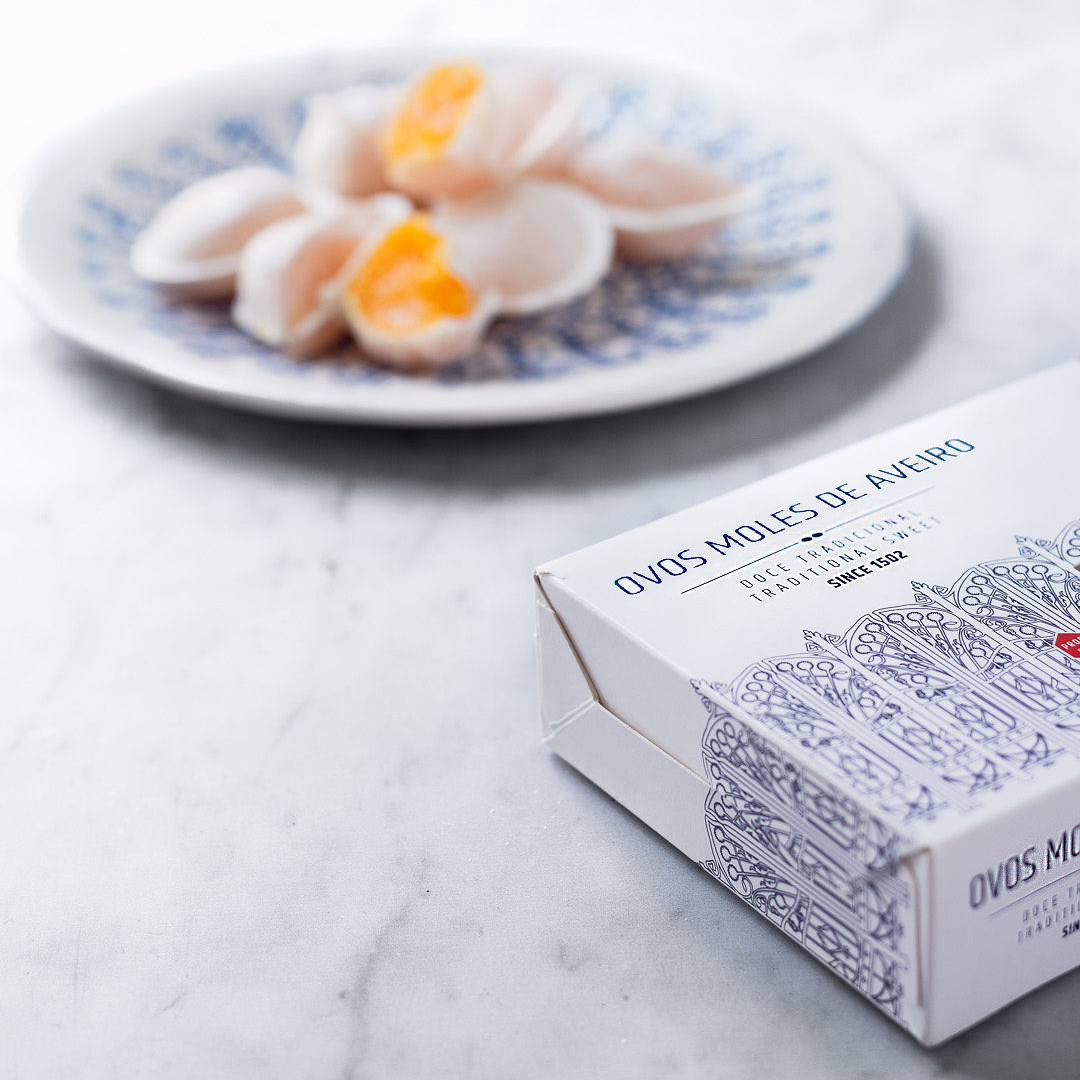
The artisanal ones Lumber Barrels and Porcelain appeared due to the need to conserve and reserve the Creme de Ovos Moles used as stuffing in the Moles Eggs of Aveiro. It is currently decorated with motifs that invoke moliceiros boats and salt pans.
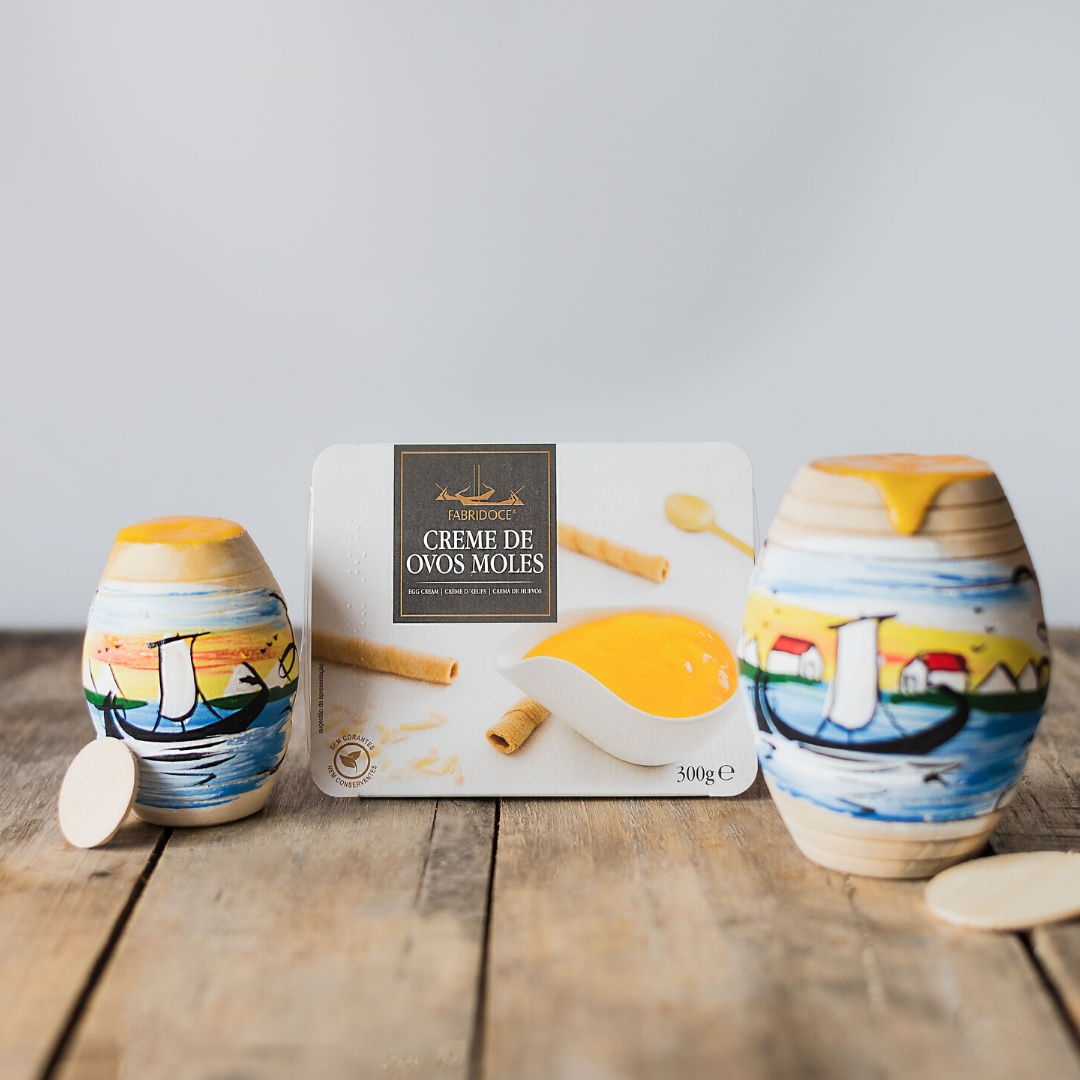
From the cream of Ovos Moles, the nuns created another product, influenced by the region of Aveiro. The Castanhas de Ovos arise from the richness of chestnut trees that the region of Aveiro has, especially on the banks of the River Vouga.
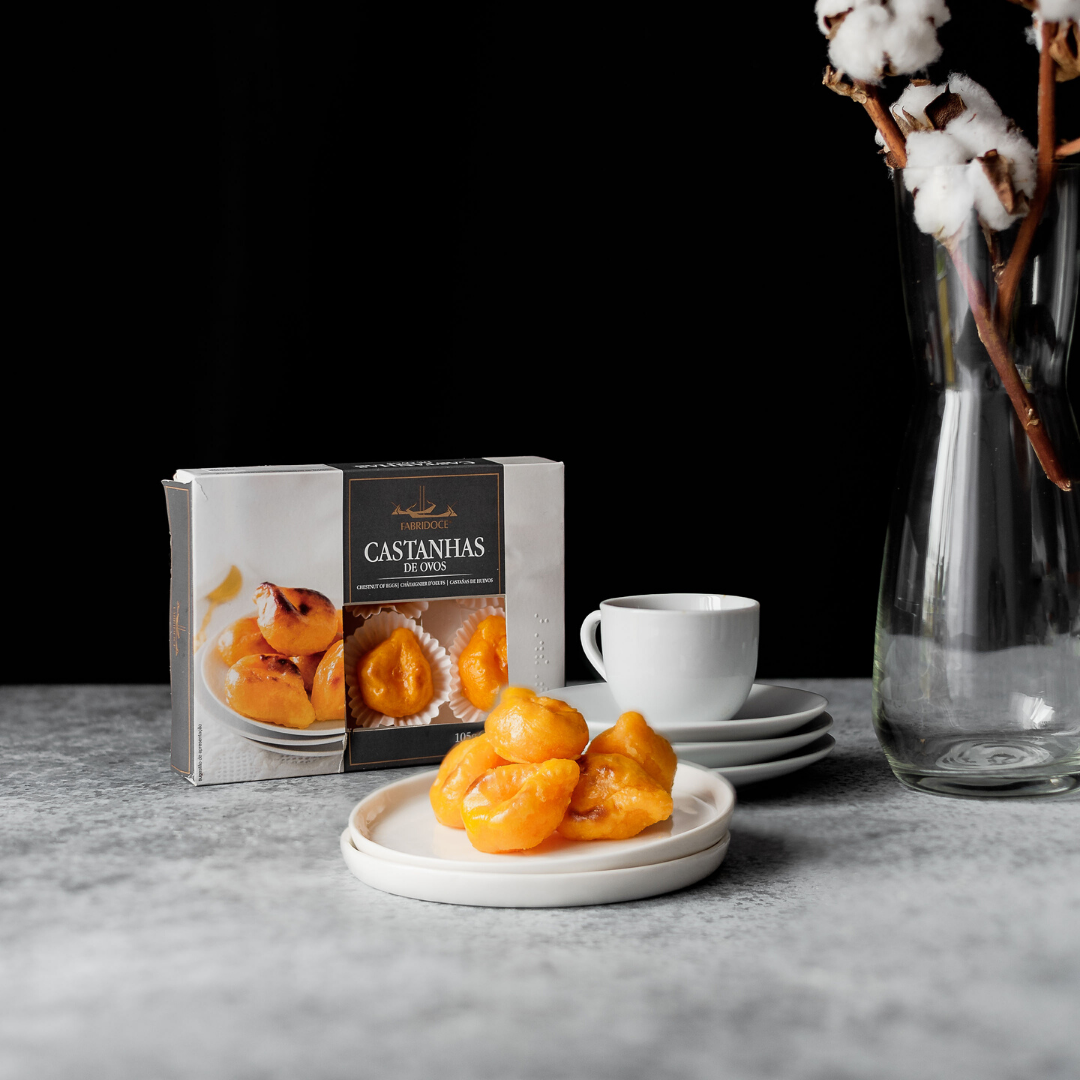
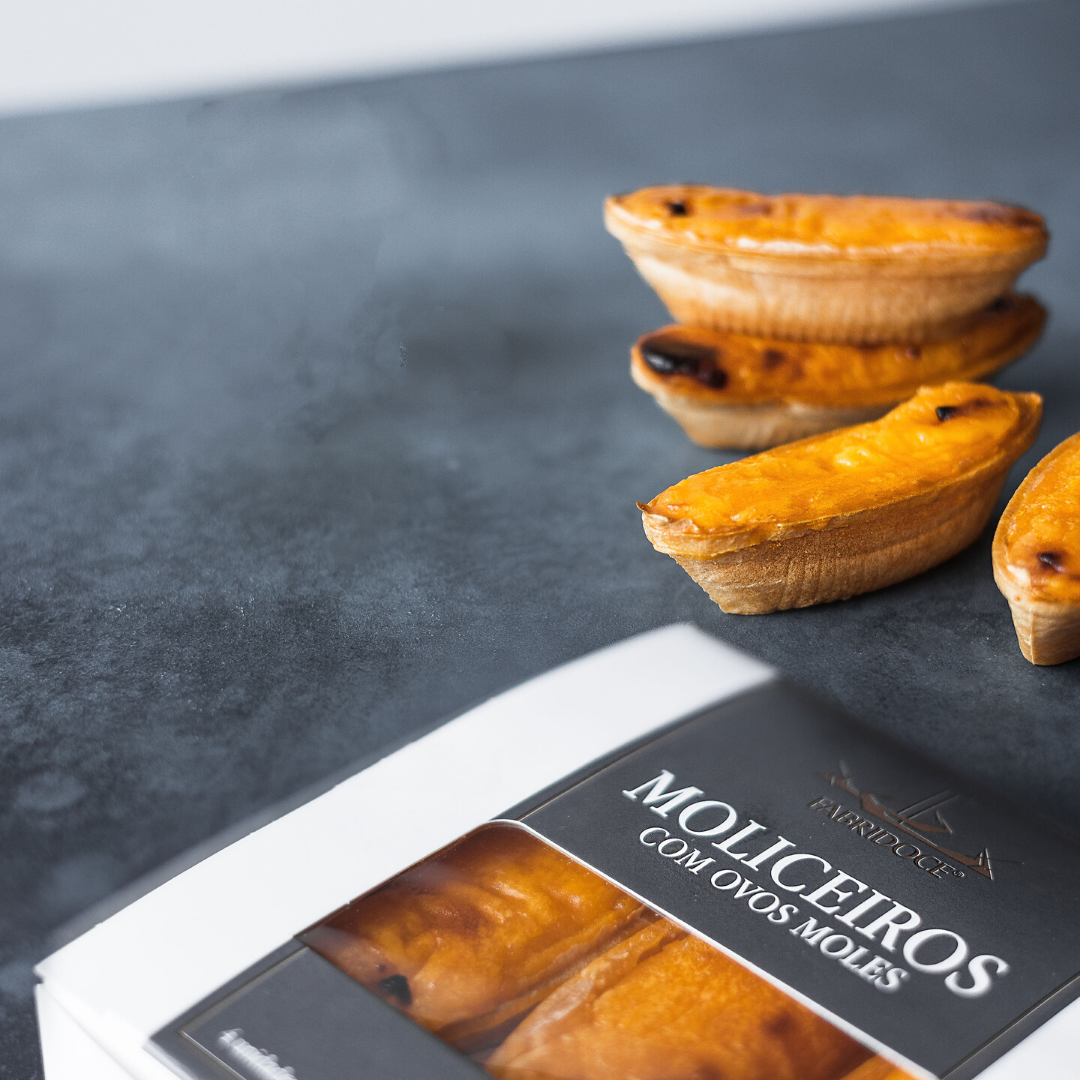
Another delicacy inspired by the city of Aveiro and coming from the cream used in the products already mentioned, is the Moliceiro com Creme de Ovos Moles. The Moliceiros, which used to be used for the harvesting of the moliço, are now the typical boats of Aveiro, one of the city’s ex-libris. The cookie in the shape of a boat stuffed with Ovos Moles cream reminds us of the Ria and the simple but unique flavors of this city.